By clicking “Accept All Cookies”, you agree to the storing of cookies on your device to enhance site navigation, analyze site usage, and assist in our marketing efforts. View our Privacy Policy for more information.
Good Sore vs. Bad Hurt: The Crucial Lesson Every Young Athlete Must Learn
Is your child playing through the wrong kind of pain? Learn how Ignite Athletic Club in Mesa trains youth athletes to speak up, listen to their bodies, and modify on the fly.
By
August 16, 2026
Related

Muscle Soreness vs. Joint Pain: Why "No Pain, No Gain" is a Dangerous Lie for Teen Athletes
"Just push through it." It’s a phrase yelled across sports fields every single day. Young athletes, desperate to prove their grit to teammates and coaches, swallow the pain and keep running. But there is a massive difference between the deep, satisfying burn of muscles growing stronger and the sharp, warning pinch of a joint about to fail.
When we teach kids to blindly ignore every signal their body sends them, we aren't building mental toughness, we are fast-tracking them to the operating room.
The Fine Line: Deciphering the Signals
Learning how to read your own body is a prerequisite for athletic longevity. For a teenager, however, pain is often a confusing spectrum. To keep them safe, we have to teach them how to identify the two primary signals their body sends after a hard training session:
- The Good Pain (Delayed Onset Muscle Soreness - DOMS): This is the classic, dull ache in the meat of the muscle that peaks 24 to 48 hours after a heavy leg day or speed session. It feels wide, tender to the touch, and usually dissipates once the athlete warms up and gets moving. This is a sign of adaptation: the body rebuilding itself stronger.
- The Bad Pain (Joint and Tendon Warning Signs): This pain is sharp, localized, and usually felt directly in or around a joint (like the knees, shoulders, ankles, or elbows). It doesn't go away once they warm up. In fact, it gets worse as the activity continues. It might feel like clicking, catching, or a dull, throbbing ache even when they are resting. This is not muscle growth: this is tissue damage.
If an athlete treats joint pain like muscle soreness and tries to grind through it, they convert a simple, treatable movement restriction into a chronic, season-ending injury.
The Power of "Modifying on the Fly" at Ignite
At Ignite Athletic Club, we teach our athletes that speaking up about pain isn't a sign of weakness; it’s a sign of elite athletic intelligence. We don't run a military bootcamp where everyone must do the exact same movement regardless of how their body feels.
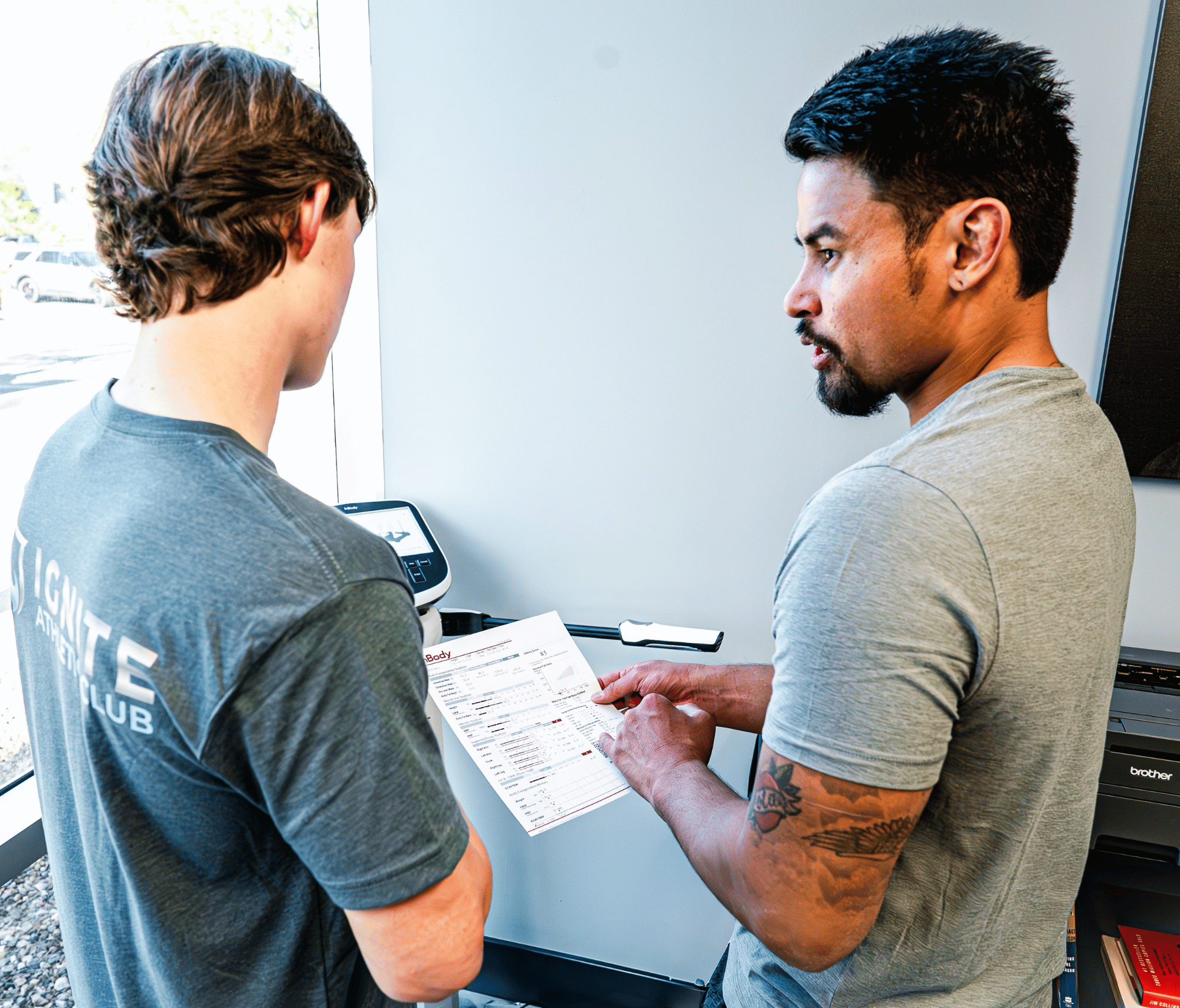
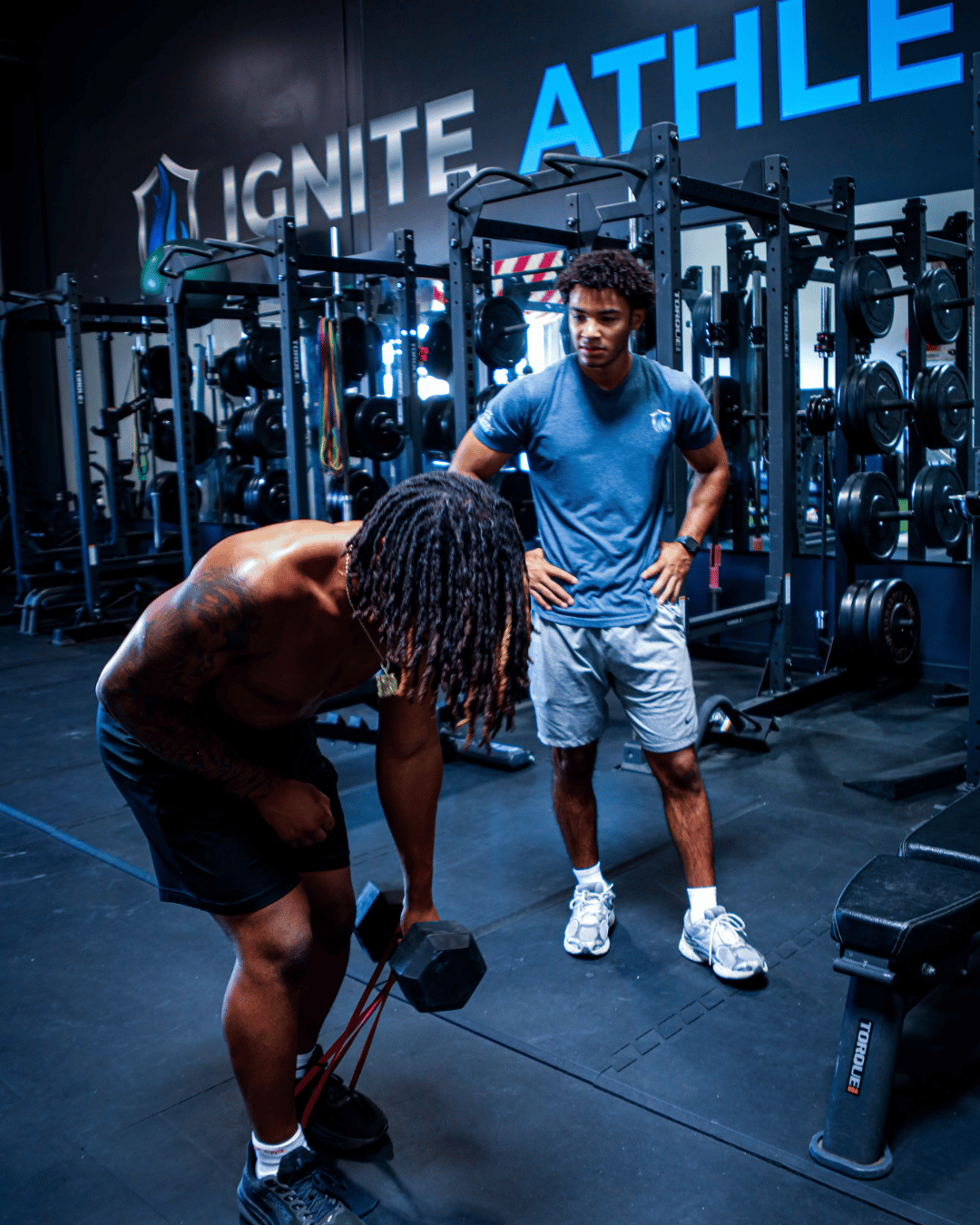
Our coaches cultivate an open-communication environment where young athletes learn to check in before, during, and after their workouts.
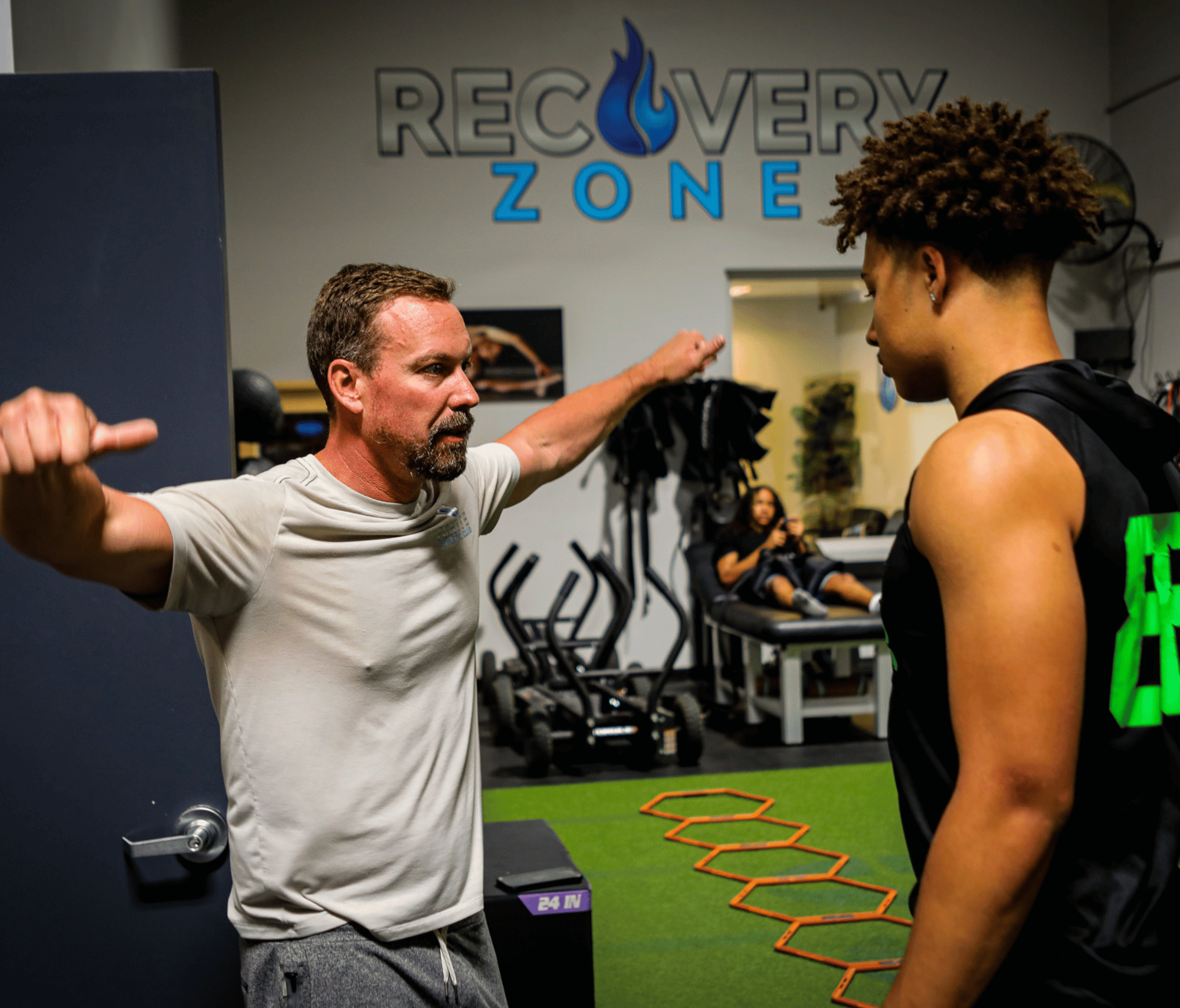
If a student-athlete walks into our Mesa, AZ facility and mentions their patellar tendon is throbbing from their high school team’s basketball practice the night before, we don't tell them to sit on the bench. Instead, we modify on the fly:
- Biomechanical Adjustments: If a bilateral squat hurts their knees, we transition them to a rear-foot elevated split squat to reduce joint shear while still building leg strength.
- Vector Modification: If jumping hurts their ankles, we shift their speed & agility training toward low-impact, lateral deceleration work that builds stability without the heavy vertical pounding.
- Regressions with Purpose: We swap out high-impact movements for loaded carries or posterior-chain-dominant exercises that bypass the irritated joint entirely while keeping their training intensity high.
This teaching moment is invaluable. It shows the athlete that they can still train incredibly hard and make progress without destroying their joints in the process.
Building Autonomous Athletes
When your child participates in youth strength training, they are learning a skill set that will protect them for the rest of their life. They learn how to articulate what they are feeling, understand their own biomechanics, and advocate for their health.
By teaching them to distinguish between muscle fatigue and joint strain, we empower them to communicate effectively with our coaching staff, their team coaches, and ultimately, themselves. That is how you build an athlete who doesn't just survive their youth sports career, but dominates it.
Is your athlete learning to listen to their body, or are they hiding an injury that could sideline their future?
Give your child the gift of smart, individualized coaching. Let’s teach them how to train with intensity, longevity, and intelligence.
Claim your Ignite Spark Pass today to secure one of our limited spots for a comprehensive movement and joint mobility assessment.